Around 1927, a group of people from Yorkshire who were working in Malaya established a social club for themselves. They called it ‘The Society of Yorkshiremen in Malaya’, and it operated successfully until the fall of Singapore to the Japanese in 1942. After the 2nd World War had ended there were still some of the original members living in Singapore and Malaya, and, at a meeting held in 1949, they decided to reconstitute the Society.
My parents were both born in Yorkshire, so when they arrived in Singapore in 1953, they duly joined the Society. From 1959 onwards one or other or both of them were members of the Society’s Committee and acted in various capacities (Secretary, Treasurer or President) until dissolution of the Society in 1970 due to lack of members. The Society’s minutes were initially recorded in a hefty, foolscap notebook with 296 numbered pages; and after the notebook ran out of pages, on loose sheets of paper. They have been in a briefcase belonging to my parents for the last 55 years – until this summer when I decided to try and find them a home.
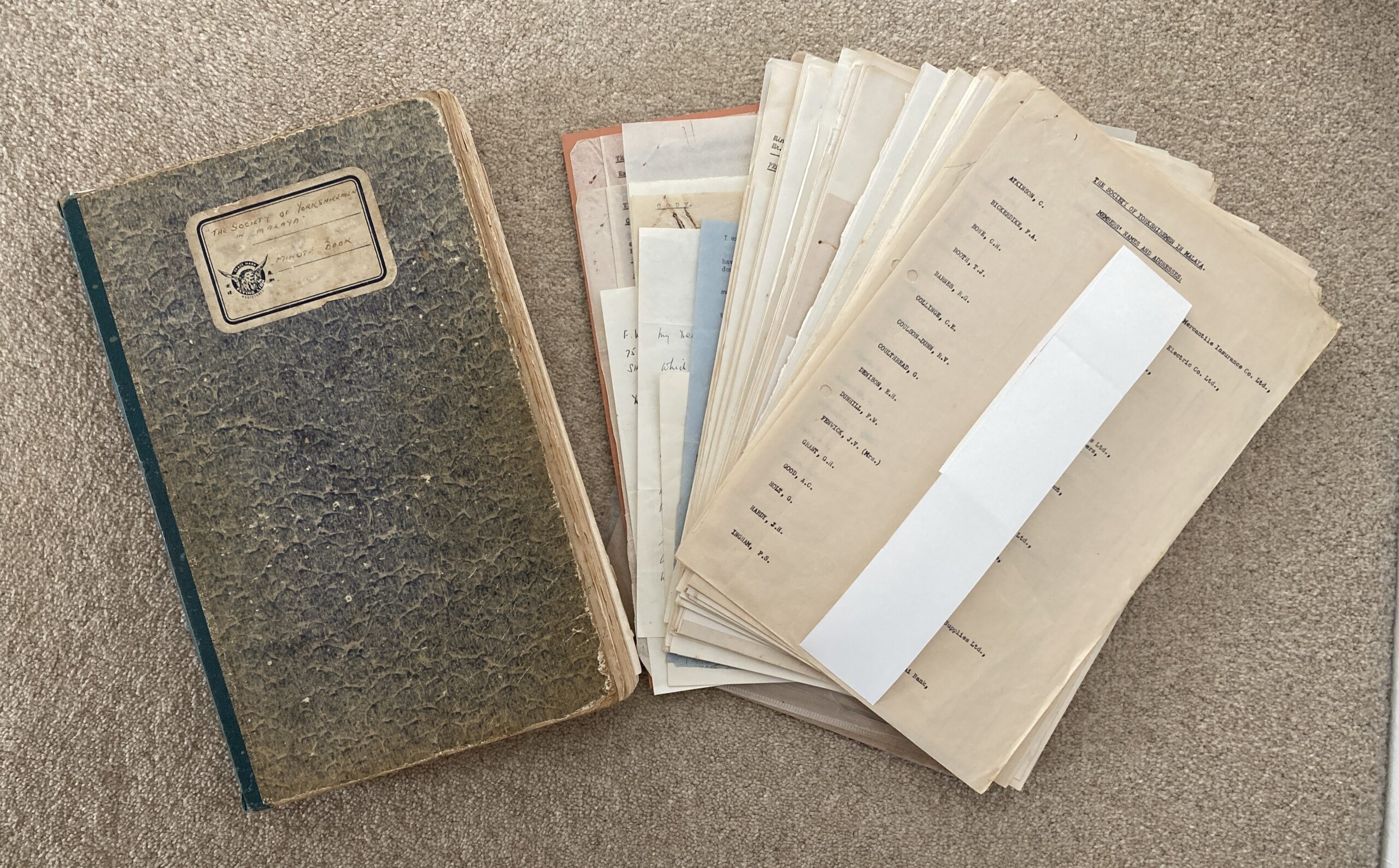
I decided I would try to create a book to accompany the Minute Book and Loose Papers: a book that would provide some summary information about the Society, and which would also include scans of the loose documents. I hoped that the accompanying book would make the whole package attractive to an archive somewhere in Yorkshire.
The book ended up with the following contents in 8 folios of 16 pages – 128 pages altogether:
Front matter (Preface & Contents)
1. A short history 3
2. Lists of Members 1953 – 1969 8
3. Lists of Committee Members 1950 – 1969 43
4. Committee Meeting Minutes 1950 – 1969 57
Appendices
A. Correspondence regarding the pre-war Society 92
B. The Benevolent Fund 101
C. Scroll given to ex-President Fred Wilson 105
D. 1966 Annual Dinner menu 106
E. 1968 Annual Dinner menu 113
F. Photos from two Annual Dinners 120
G. The Society’s Minute Book 121
Having finished the text, I researched possible archives in Yorkshire and decided to contact York Libraries and Archives. I was told that decisions about acquiring new material are taken at Collection Meetings held at the end of every month; so, I provided a copy of the first folio of the book for consideration by the meeting and held my breath. On 2nd September I got an email saying the organisation would like to acquire the material.
Meanwhile, I’d been producing the hardcopy book. The first task had been to print each of the 8 folios using Word’s ‘Bookfold’ Page Setup in MS Word. This requires the pages to be printed out in landscape on both sides of, in this case, A3 pages.
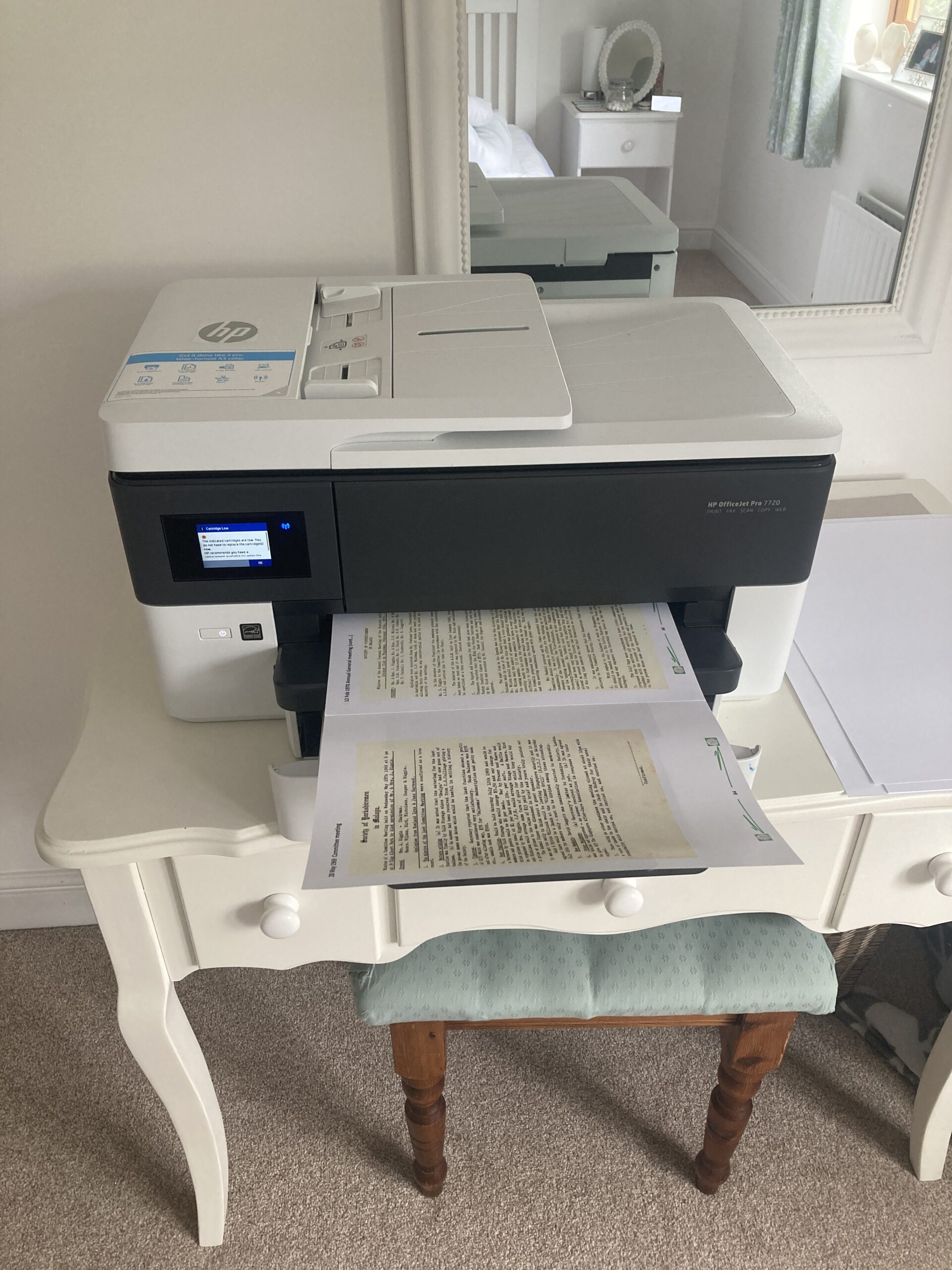
Although the Bookfold printing process has been described in previous posts, here’s a recap of what to do. When you press Print in Bookfold mode, the first side of the pages are printed – 2 pages side by side on one A3 page. The pages must then be reordered by moving the page on top to one side, then placing the next page on top of the first page, then placing the next page on top of the second page, and finally the next page on top of the third page. The reordered set of pages are then placed back into the paper tray pointing in the same direction as they came out. Instructing the printer to continue will then produce the four pages printed similarly on the other side. Reordering the pages in the same way as before, and folding the pages in half will magically produce the 16-page set in the correct page number order.
With all 8 folios printed out and folded, the next step was to sew them together; and then to paint PVA glue over the stitching (but not the tapes) to hold the set firm during subsequent steps.
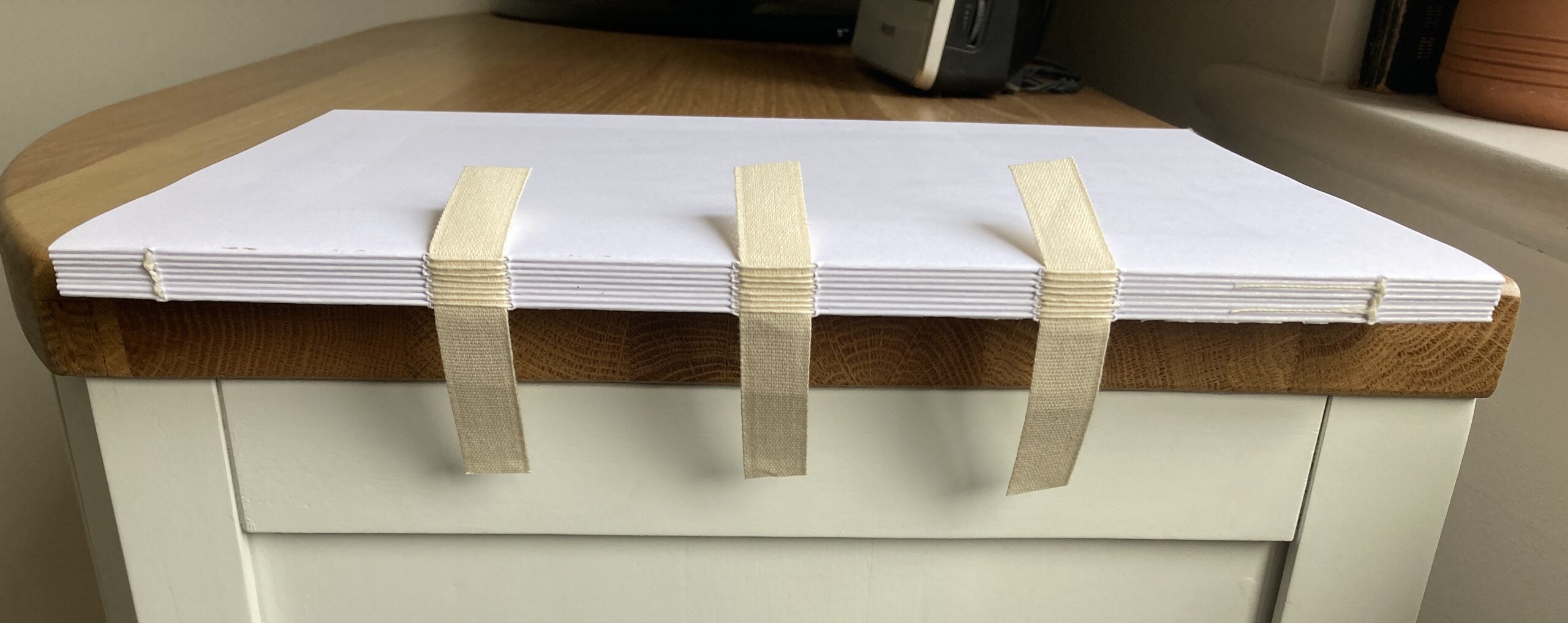
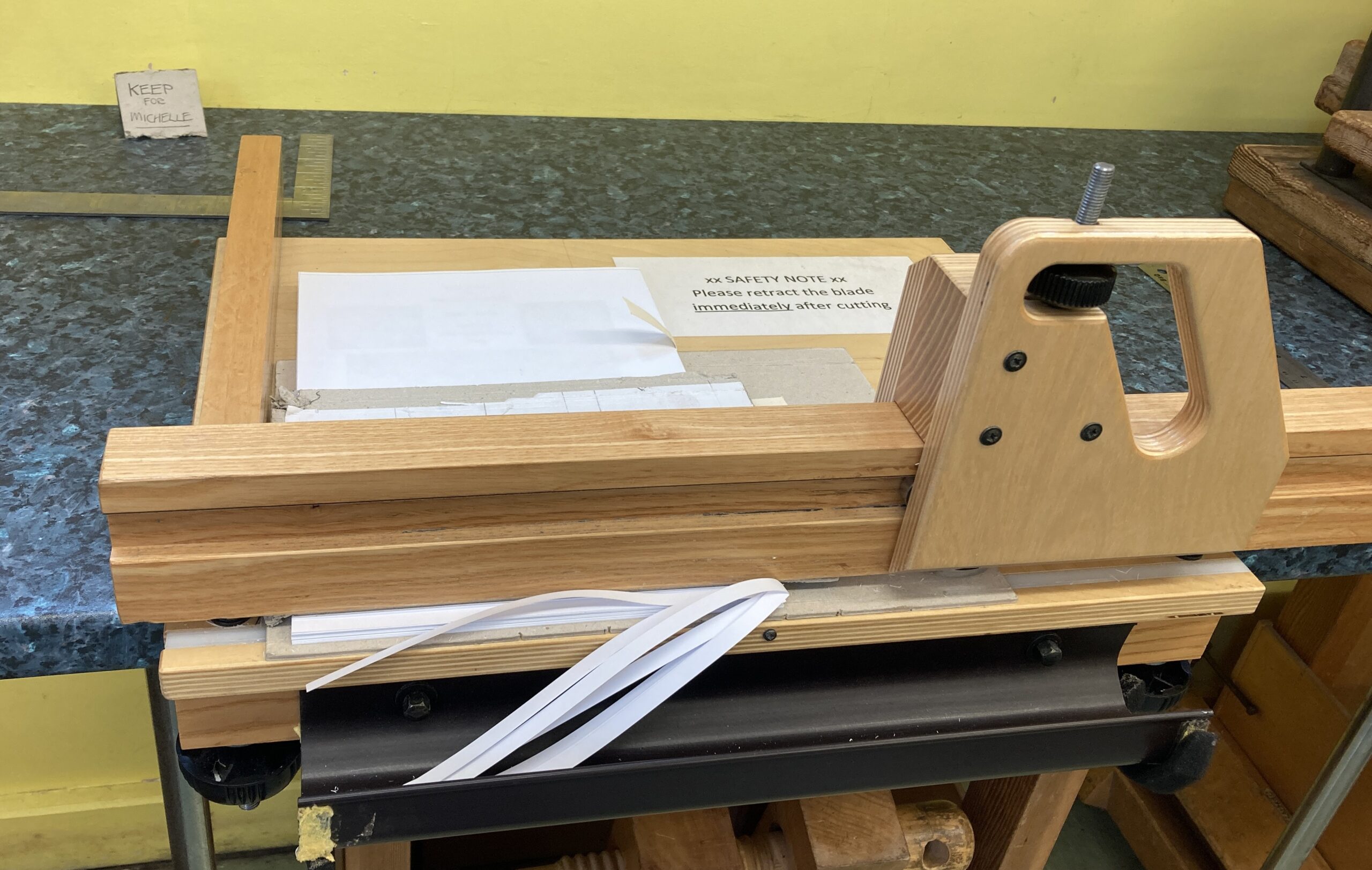
The edges of the text block were then trimmed and squared in a bookbinders plough.
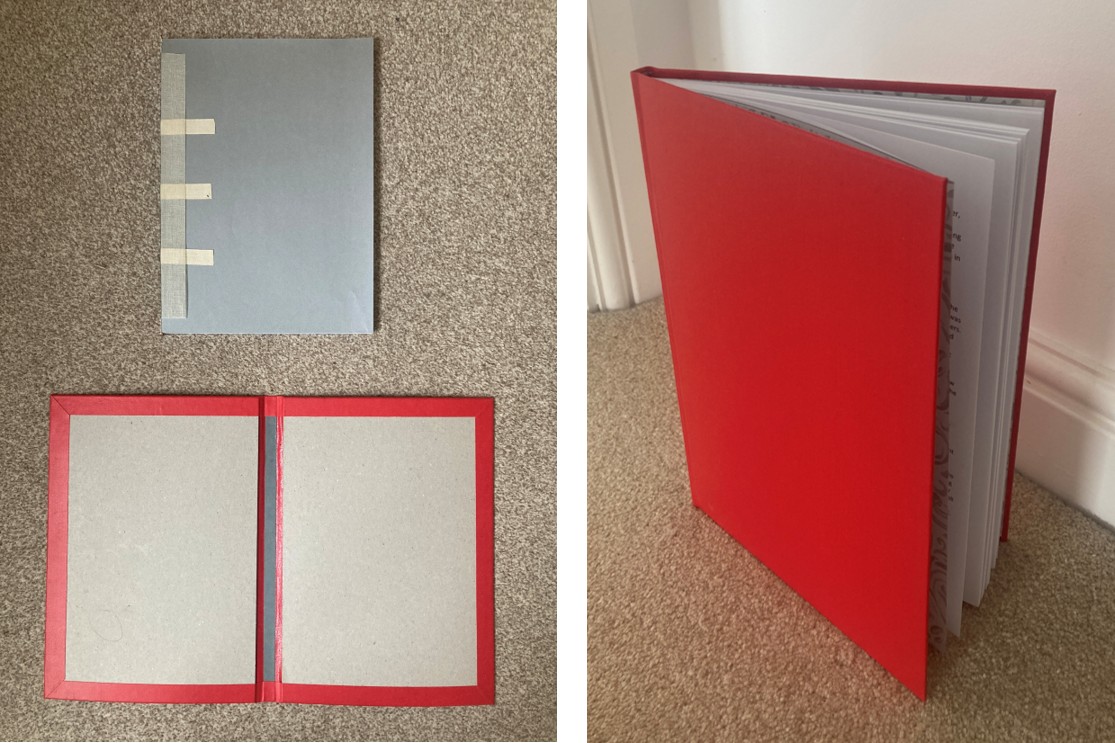
The final work on the text block was to glue on the end papers, the end bands, and a piece of fraynot on the spine with a 2cm overlap on either side and a piece of Kraft paper on top of it. Next, a cover was made using 2mm board with a buckram fabric; and the end papers were glued to the cover to complete the hardback book.
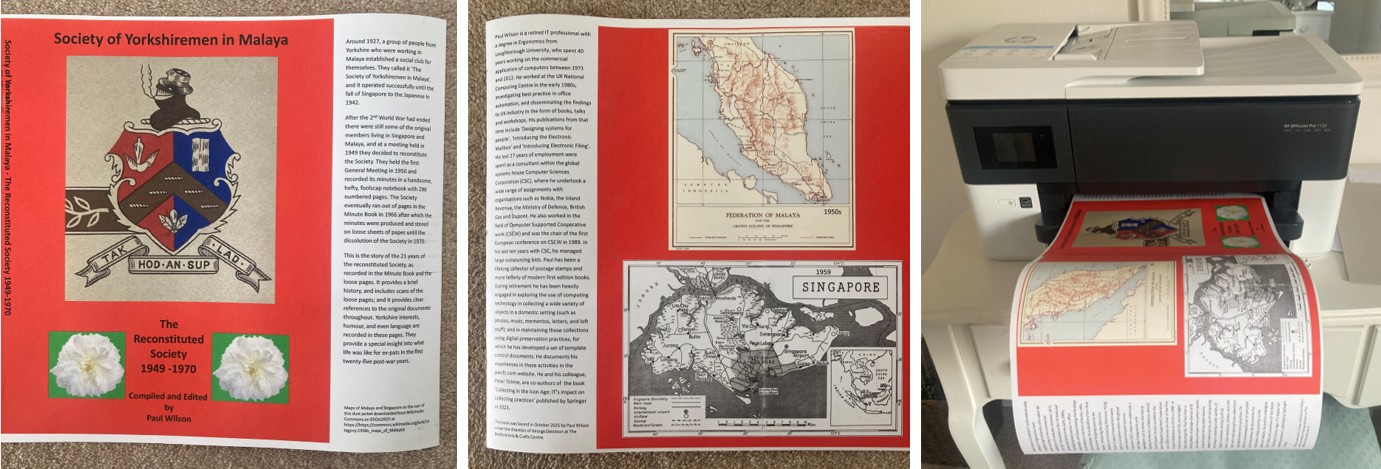
Now that the dimensions of the completed hardback book could be measured, work on the Dust Jacket (DJ) started in PowerPoint. The design included 8.2 cm wide flaps, making the total length of the DJ 62cm. The maximum length of paper that my HP Officejet Pro 7720 A3 printer will deal with is 43.1 cm, so printing this DJ required that the image be split in two and one part to be rotated through 180 degrees. The first part was then printed and the paper was then turned round and fed back through the printer to print the other part at the other end.
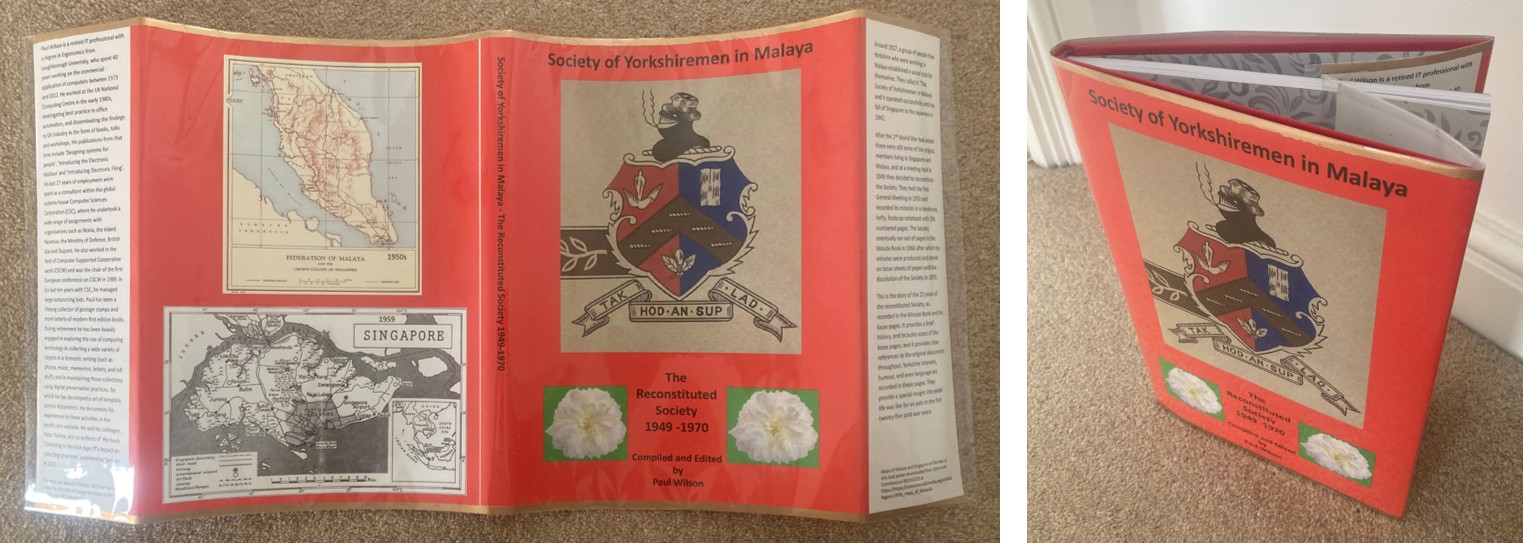
Having printed the DJ, it was cut to size and folded accurately around the physical book so the vertical title was central on the spine of the book. Finally, archival plastic was fitted around the DJ with a 5/6cm overlap folded over along the top and bottom edges (the folds hold the plastic in place so no fixative is required).
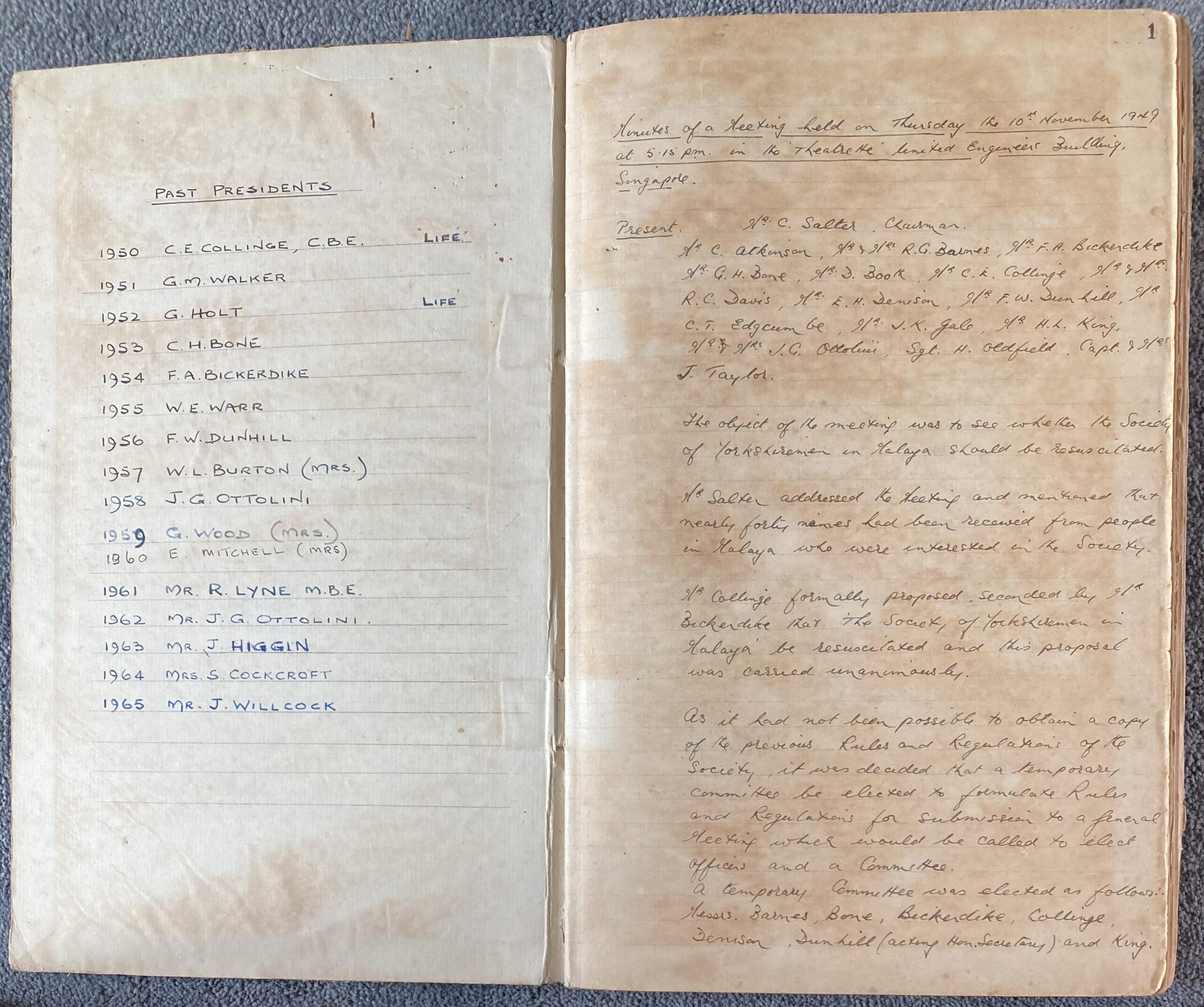
Although I had committed to giving all the physical materials (the hardback book, the Minute Book and the Loose Papers) to York Libraries & Archives, I wanted to have an electronic version of all the material which we could keep in the family. I already had an electronic version of the hardback book that I had created, and that already included all the Loose Papers; all that was missing were the pages in the Minute Book. So, I took photographs with my iPhone of the Minute Book opened up on each double page (photos taken by the modern mobile phone provide photos of more than sufficient quality for such a job). It was surprisingly simple and quick: I found a coffee table that was just the right height that I could put my iPhone on with the camera end sticking out over the side; and I put the opened Minute Book on the floor in position so that its full extent appeared in the photo image. I held the camera in position with one hand and pressed the photo button with the other. Then, using the photo button hand I turned the Minute book page over and took the next photo. In all there were 169 photos (because, while most pages were written on, some had minutes glued in – some with multiple sheets of paper stuck into them).
Armed with digital versions of all the material, I simply assembled them all into a single PDF, starting with the pages from the Hardback Book and adding the Minute Book images on at the end. Then I added the front of the DJ and a page with both flaps on it to the very front of the file; and a page with the back of the DJ to the very end of the file.
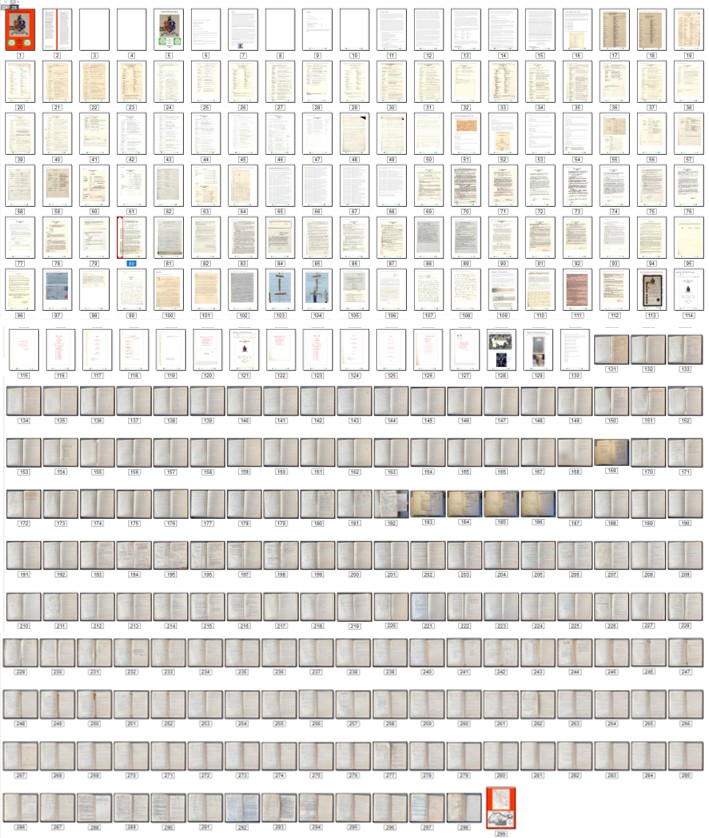
There was now only one task left to do: to make the references in the digital version of the Hardback Book actually link to the pages they were referring to. So, for example, the reference to MB63 in the first para of Chapter 2 needed to be linked to the 170th digital page in the PDF. It was a long job, given that there were over 400 references to deal with. However, with it completed, the whole electronic book provides quick and easy access to all the interlinked material.
I now turned to the practicalities of shipping the physical material to York. I decided to drive to York so that I could take a look at where the collection would be stored and accessed, and I agreed a date of 28th November with my contact at the York Archives. The legalities of the transfer of the material also needed to be dealt with: there was a 4-page Gift Agreement, two copies of which were signed by my mother (the owner of the Minute Book and Loose Pages) and a witness. The agreement essentially passed all rights to “The Council of the City of York (‘the Council’) acting by Explore York Libraries and Archives Mutual Ltd” subject to any specified limitations; we specified no limitations.
On Friday 28th November, I set out for York, arrived at York Park & Ride at around 1.30pm, and was deposited by the bus in York town Centre next to Clifford Tower just after 2pm. A 20-minute walk through the vibrant York shopping centre teaming with Black Friday shoppers, took me to Museum Street where York Archives and Library is located. I met with the Archivist who I was dealing with and handed over the books and papers. She signed the two copies of the Gift Agreement and gave one back to me; and then very kindly gave me a short tour of the three main areas (the Archives Reading Room, the Family History Room and the Local History Room). I left to celebrate the completion of my mission with a cup of coffee and excellent bacon sandwich in one of York’s many coffee shops.
A few weeks later I received a thank-you letter from York Archives which included the following:
“Thank you for depositing the records of the Society of Yorkshiremen in Malaya with the archive here at Explore. Your records are a unique part of Yorkshire’s heritage and depositing them with us will ensure that the history of the Society of Yorkshiremen in Malaya is not lost. Your deposit will help us to share these stories with future generations and enable researchers to gain a richer picture of life in York.
Now that your records have been deposited, we will put them through a programme of cataloguing and packaging that will aid online discovery and the preservation of your collection. Once this process is complete, we will be able to make them available to researchers, subject to any access restrictions.
Your records will form part of the city’s c450 cubic metres of physical collections and our growing digital archive. Together, these collections document nearly 900 years of York’s history…..”
If you’ve read all this way to the end of the story you may be interested in reading a bit about what the Society of Yorkshiremen in Malaya actually did. So, here are the 5 pages of Chapter 1 which provide a brief history of the Society (note that page number references in this text are preceded by either MB or TV. MB refers to the Society’s Minute Book. TV refers to pages in This Volume – the Hardback Book). I believe that the documents will have been indexed, packaged and made available in the York Archives within approximately 6 months – around the middle of 2026.